What’s New in .NET 10 – Features, Performance & Beginner Guide
By Kamlesh Bhor · 📅 20 Jan 2026 · 👁️ 6727
.NET 10 is one of the most important releases in the .NET ecosystem so far. As a Long-Term Support (LTS) release, it is designed for stability, performance, and long-term production use. Microsoft has focused heavily on making applications faster, simpler to write, easier to maintain, and more secure by default.
If you are a beginner, intermediate, or even an experienced .NET developer, .NET 10 brings improvements you can benefit from without rewriting your applications.
In this article, we’ll explore everything new in .NET 10, explained in a simple and practical way.
🧠 What Is .NET 10?
.NET 10 is the next evolution of Microsoft’s unified .NET platform, succeeding .NET 8. It continues Microsoft’s vision of a single, cross-platform development stack for building:
-
Web APIs
-
Cloud-native applications
-
Microservices
-
Desktop and mobile apps
-
Blazor web applications
Why .NET 10 Matters
-
✅ Long-Term Support (LTS)
-
✅ Faster runtime & better memory usage
-
✅ Cleaner C# language features
-
✅ Simplified web and API development
-
✅ Stronger security defaults
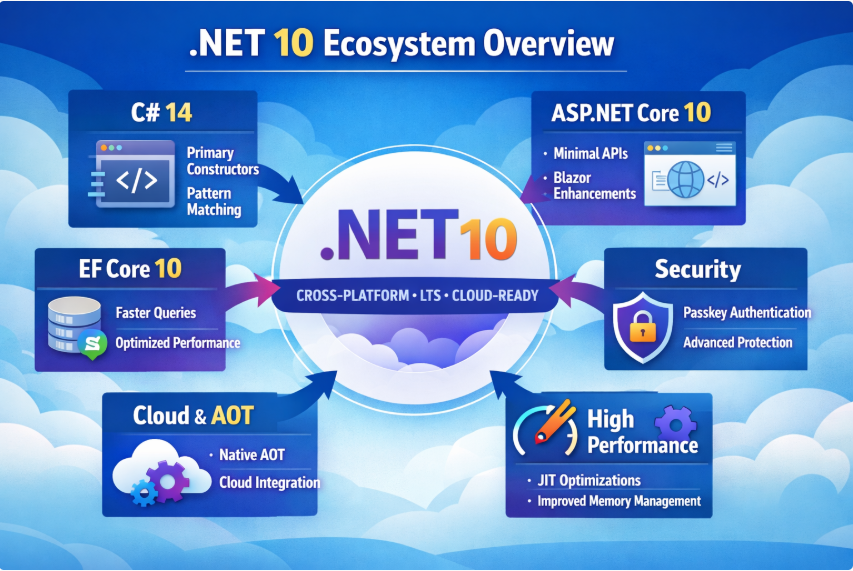
✨ C# 14 – Cleaner, Simpler, Safer Code
.NET 10 ships with C# 14, focusing on reducing boilerplate and improving readability.
🔹 Primary Constructors for Classes
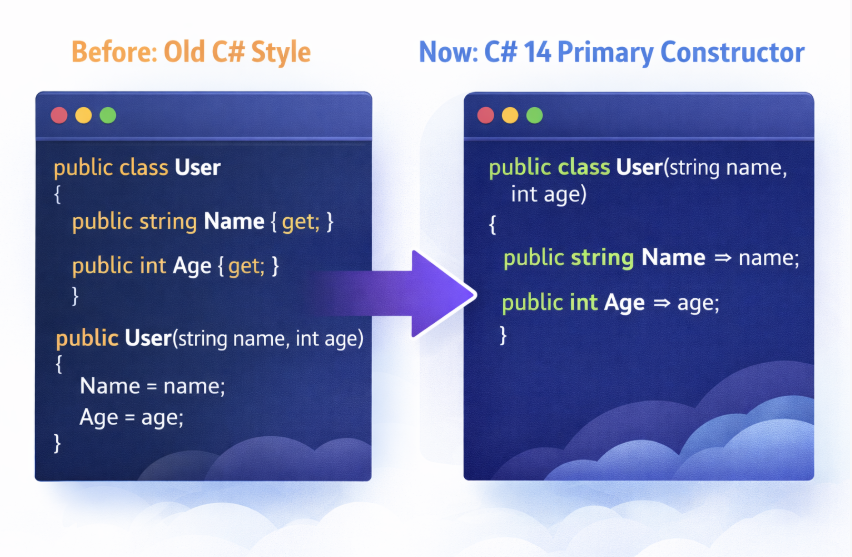
C# 14 allows you to define constructors directly in the class declaration. This is extremely useful for DTOs, models, and domain objects.
Before (Older C# versions)
public class User
{
    public string Name { get; }
    public int Age { get; }

    public User(string name, int age)
    {
        Name = name;
        Age = age;
    }
}
public class User(string name, int age)
{
    public string Name => name;
    public int Age => age;
}
Why This Matters
-
Less boilerplate code
-
Easier to read and maintain
-
Perfect for clean architecture and DDD models
🔹 Object Freezing (Runtime Immutability)
.NET 10 introduces object freezing, allowing objects to become immutable at runtime.
appConfig.Freeze();
Once frozen:
-
❌ Properties cannot be modified
-
✅ Thread-safe by design
-
✅ Ideal for configuration and cached data
This significantly reduces bugs in multi-threaded and high-concurrency applications.
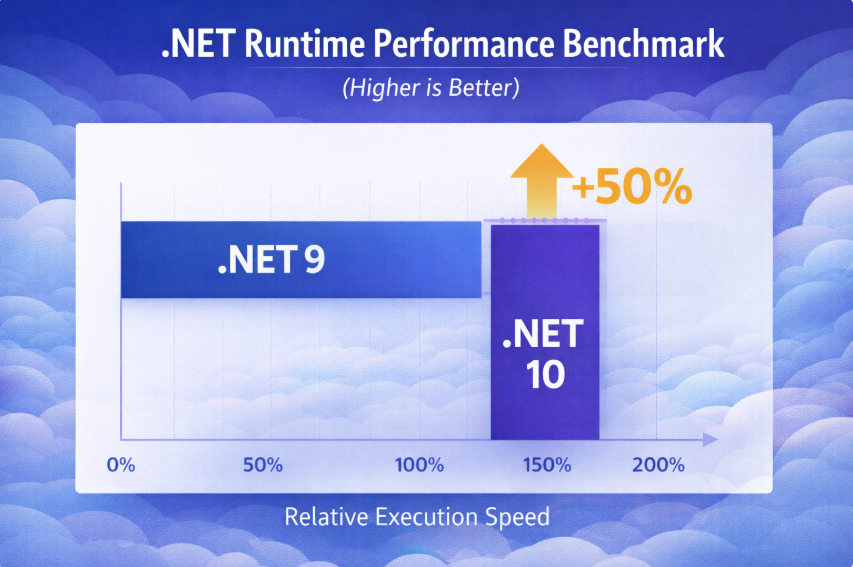
⚙️ .NET 10 Runtime – Faster Without Code Changes
One of the biggest strengths of .NET 10 is performance improvement with zero code changes.
🔹 JIT Compiler Improvements
The JIT compiler now:
-
Produces more optimized machine code
-
Improves loop handling
-
Optimizes interface and array access
-
Reduces unnecessary allocations
This directly improves:
-
API throughput
-
Background job processing
-
High-traffic web applications
🔹 Smarter Memory Management
.NET 10 introduces:
-
Automatic eviction of unused memory pools
-
Reduced garbage collection pressure
-
Better handling of long-running services
This is especially beneficial for:
-
Microservices
-
Containers
-
Cloud-hosted APIs
🌐 ASP.NET Core 10 – Cleaner APIs & Better Web Development
ASP.NET Core 10 continues the trend of minimal, fast, and developer-friendly APIs.
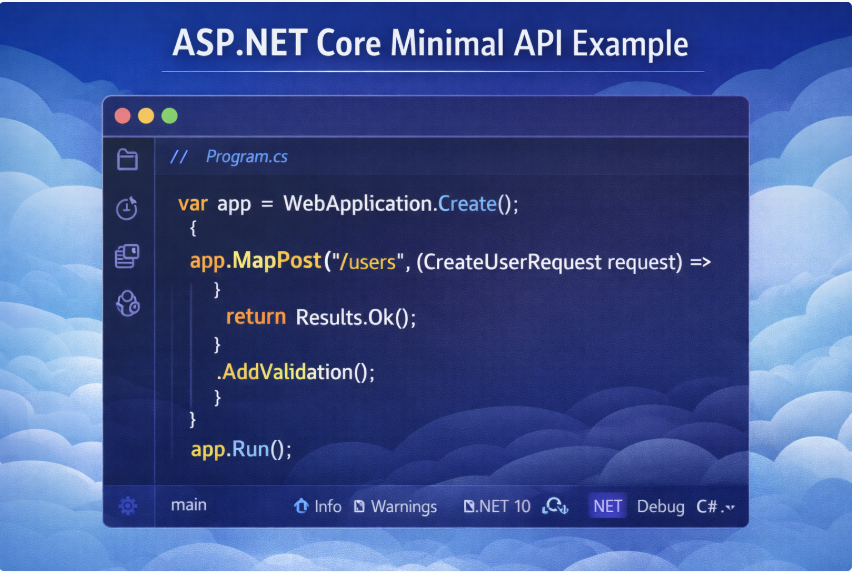
🔹 Minimal APIs with Built-in Validation
Validation is now integrated directly into Minimal APIs.
app.MapPost("/users", (CreateUserRequest request) =>
{
    return Results.Ok();
})
.AddValidation();
Benefits
-
No controllers required
-
No manual validation code
-
Cleaner and more readable APIs
Perfect for microservices and lightweight APIs.
🔹 Improved OpenAPI & Swagger
ASP.NET Core 10 adds:
-
Native OpenAPI 3.1 support
-
Better Swagger UI rendering
-
Cleaner API contracts
-
Easier client generation
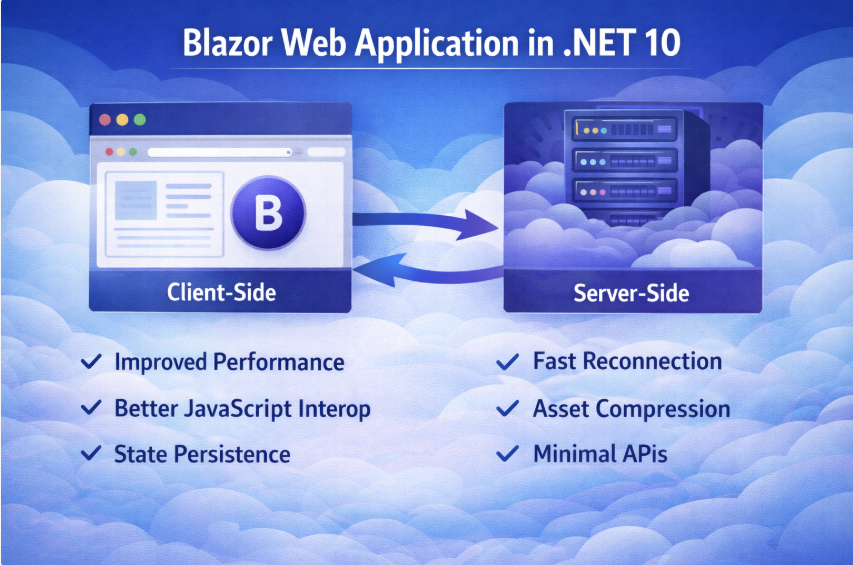
🌈 Blazor Improvements in .NET 10
Blazor continues to mature and becomes more production-ready.
What’s Improved?
-
Faster page loading
-
Better reconnection handling
-
Improved JavaScript interoperability
-
Smarter static asset compression
Blazor apps now feel closer to modern SPAs in terms of performance.
📦 .NET 10 SDK – Simpler Developer Experience
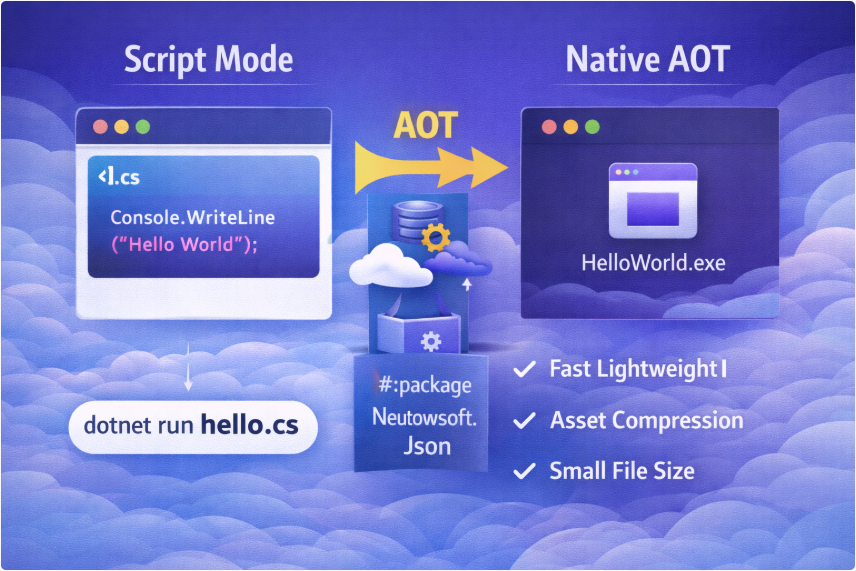
🔹 File-Based Apps (No Project File Needed)
You can now run C# directly from a single file:
dotnet run hello.cs
This is great for:
-
Small tools
-
Automation scripts
-
Learning and experimentation
🔹 Native AOT by Default
File-based apps now compile using Native AOT:
-
Smaller executables
-
Faster startup
-
No runtime dependency
🗄️ EF Core 10 – Faster and More Efficient Data Access
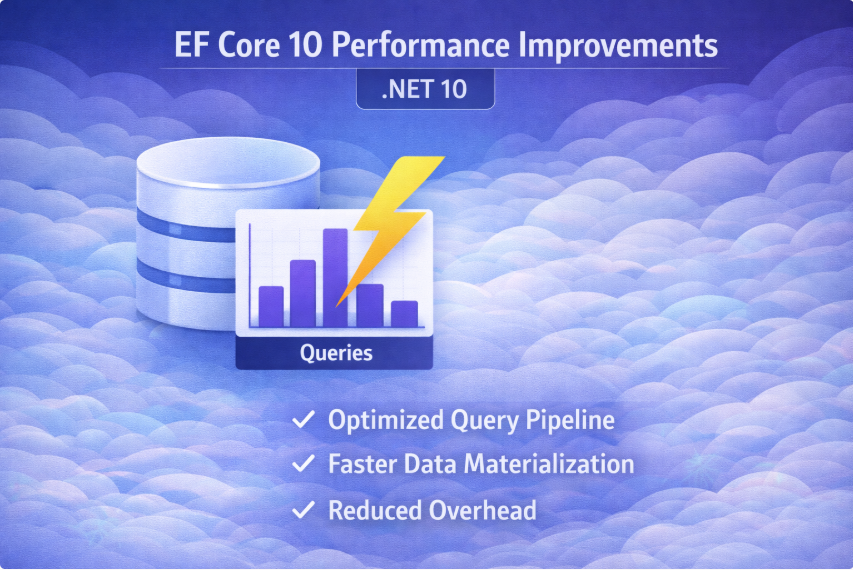
Entity Framework Core 10 focuses heavily on performance and scalability.
Improvements Include:
-
Optimized query pipelines
-
Faster data materialization
-
Reduced memory overhead
These improvements make EF Core more suitable for high-scale enterprise applications.
🔐 Security & Authentication Improvements
.NET 10 improves security by default.
Key Enhancements
-
Passkey-based authentication
-
Improved token handling
-
Safer default configurations
These changes make modern authentication easier and more secure.

🔄 Should You Upgrade to .NET 10?
Upgrade If:
-
You’re using .NET 6 or .NET 8
-
You want LTS stability
-
Performance and scalability matter
Before Upgrading:
-
Check NuGet compatibility
-
Review breaking changes
-
Test critical workloads
🏁 Final Thoughts
.NET 10 is not just another version — it’s a polished, performance-focused, and future-ready platform.
Key Takeaways
-
✔ Faster runtime
-
✔ Cleaner C# with C# 14
-
✔ Better APIs with ASP.NET Core 10
-
✔ Improved EF Core performance
-
✔ Stronger security by default
If you’re starting a new project or planning long-term support, .NET 10 is the best choice today.
❓ FAQ – .NET 10
Is .NET 10 an LTS release?
Yes, .NET 10 is a Long-Term Support release.
Can I upgrade from .NET 8 to .NET 10?
Yes, and it is recommended for long-term projects.
Does .NET 10 improve performance?
Yes, performance improvements are one of its biggest strengths.

Article by Kamlesh Bhor
Feel free to comment below about this article.
💬 Join the Discussion